Our Research
Obsessive-compulsive disorder (OCD), Tourette disorder, and related early-onset neuropsychiatric disorders are common, highly heritable, and cause substantial impairment. Yet their underlying biology remains poorly understood. Our lab uses human genetics to identify disease-associated genes and variants and determine how they disrupt molecular, cellular, and neurobiological processes. Our long-term goal is to translate these discoveries into more effective approaches to diagnosis and treatment.
Our work spans statistical genetics, functional genomics, and systems biology, integrating computational and experimental approaches to connect genetic risk to disease mechanisms.
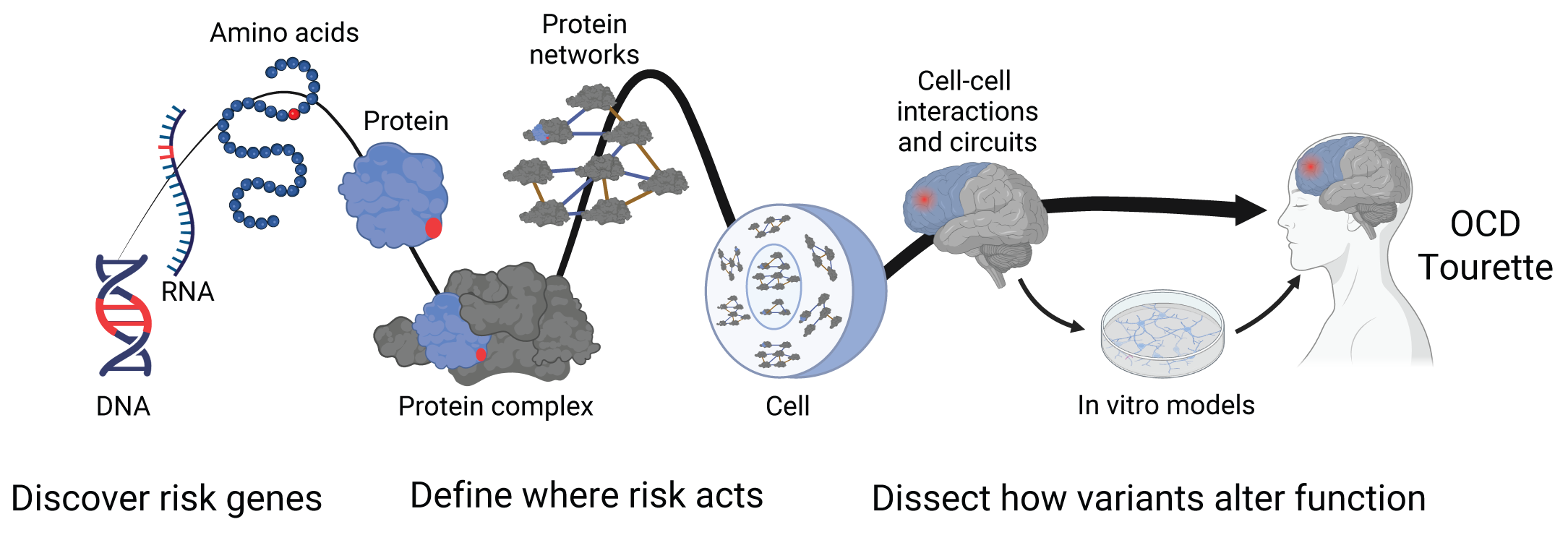
Our current research focuses on:
- Discovering large-effect risk genes in OCD and Tourette disorder using rare variant genetics
- Defining where, when, and how genetic risk converges using computational and functional genomic approaches
- Dissecting how select risk genes and patient variants alter molecular and cellular function